Commercial Space Transformation · Madrid
Commercial space fit-out developed in two phases (coliving → offices), delivered in coordination with the architect and contractor. The work defines criteria that directly impact execution and outcome: zoning, material continuity, lighting and critical detailing points.
Context
Non-residential starting point and an evolving brief during construction.
The project starts from a non-residential shell and requires a controlled, legible spatial narrative: circulation hierarchy, proportion and light control. The interior design work runs in close coordination with the architect and contractor, with an operational goal: to lock in criteria that reduce uncertainty on site (materials, lighting and detailing) and prevent last-minute “patches”.
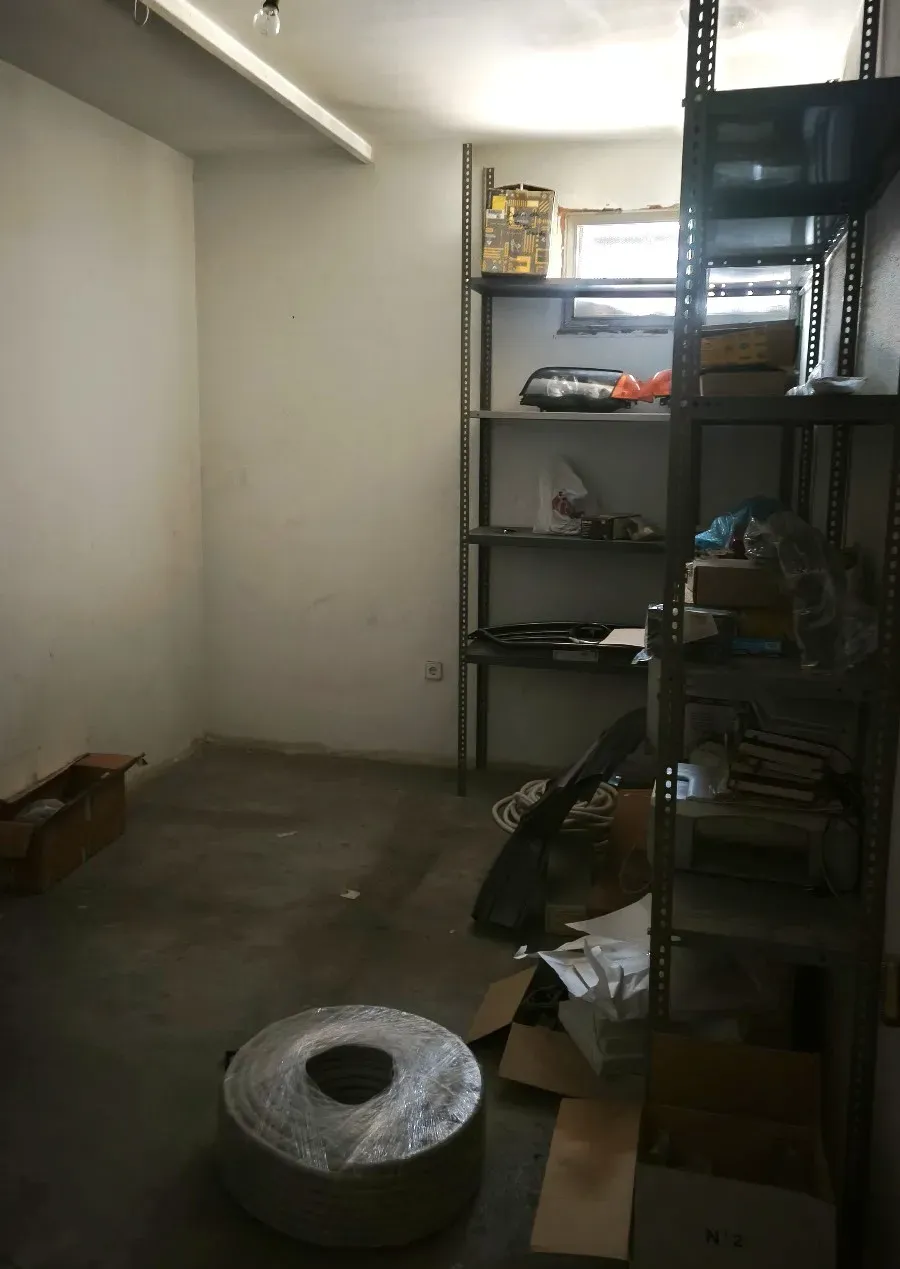
Initial state: Documenting the baseline conditions prior to intervention.
Phase 1 · Coliving
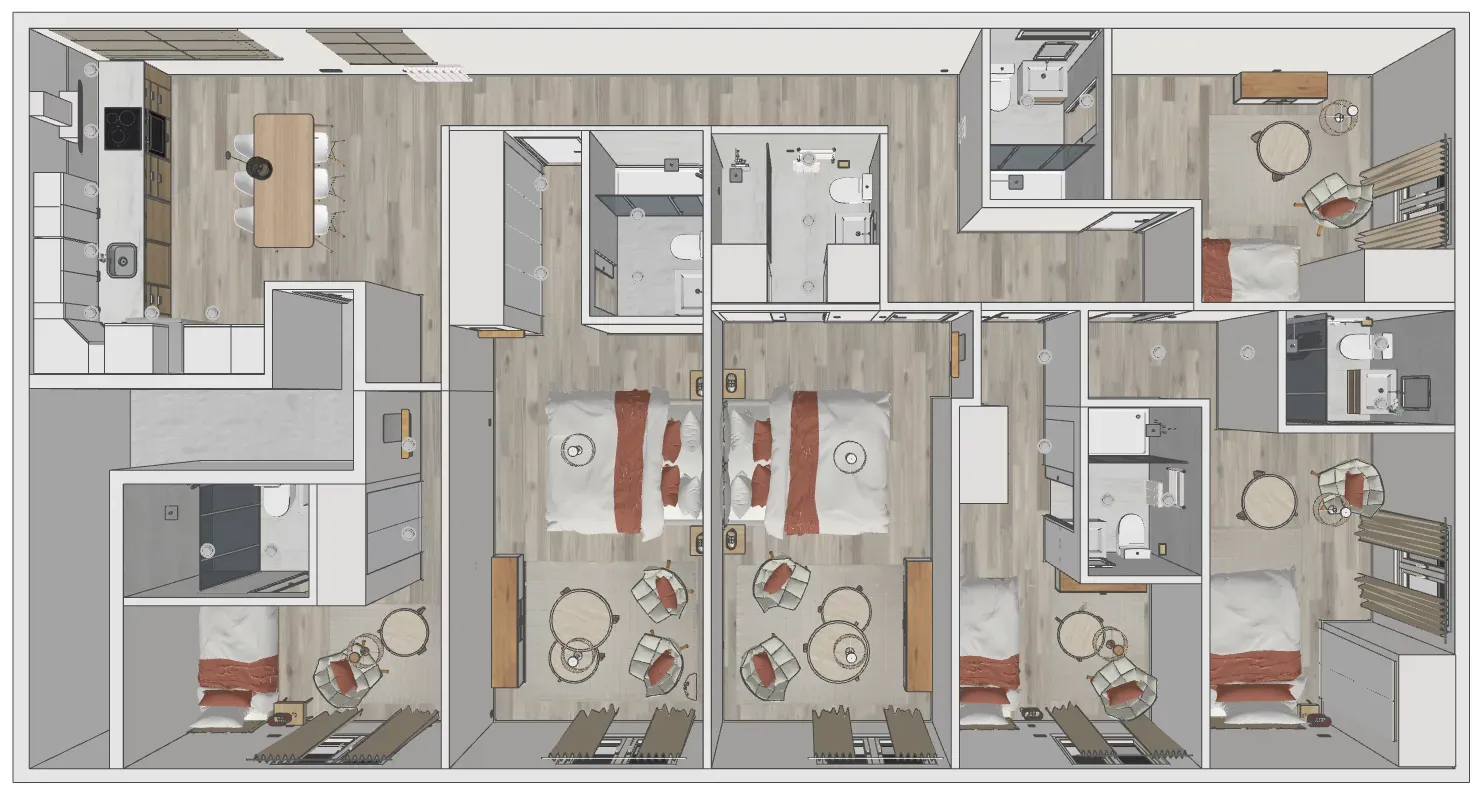
Residential criteria: circulation, domestic scale and controlled repetition across bedrooms.
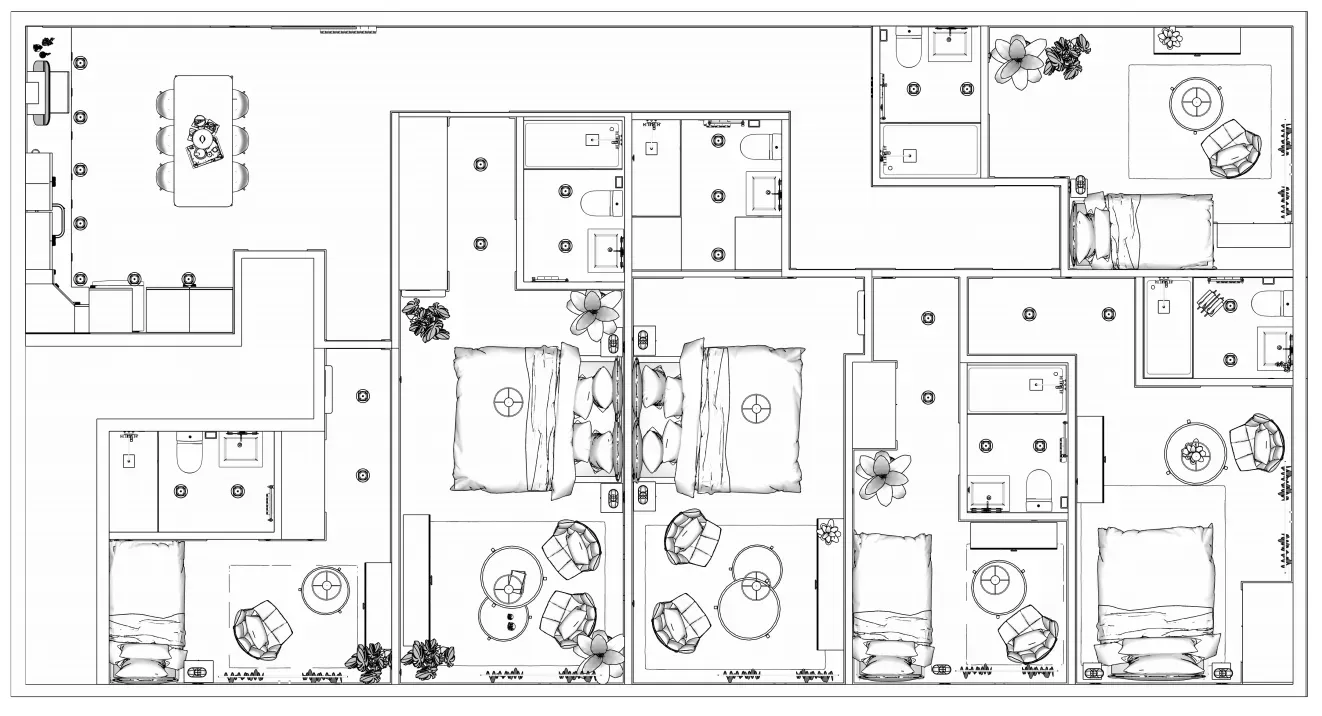
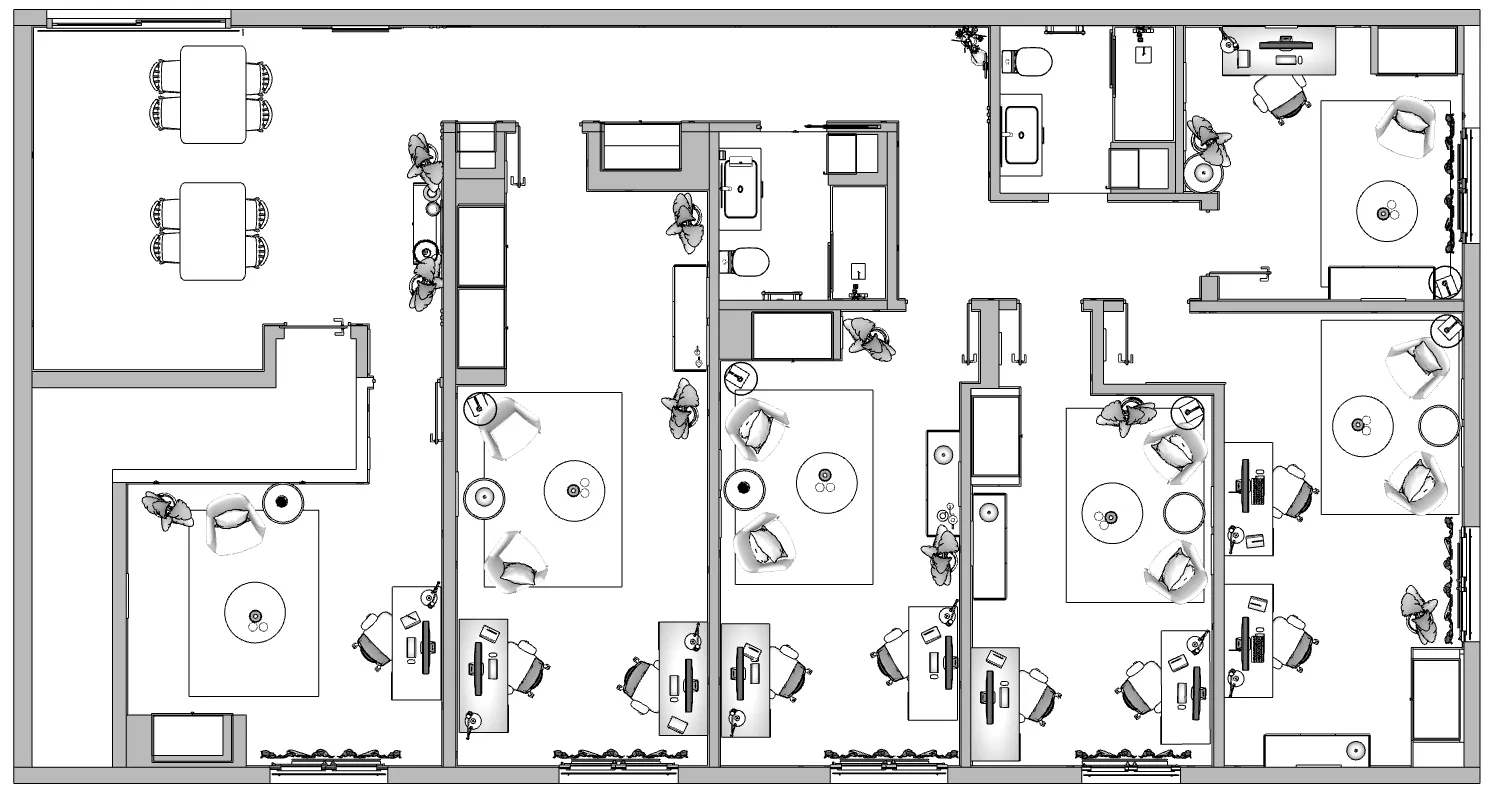
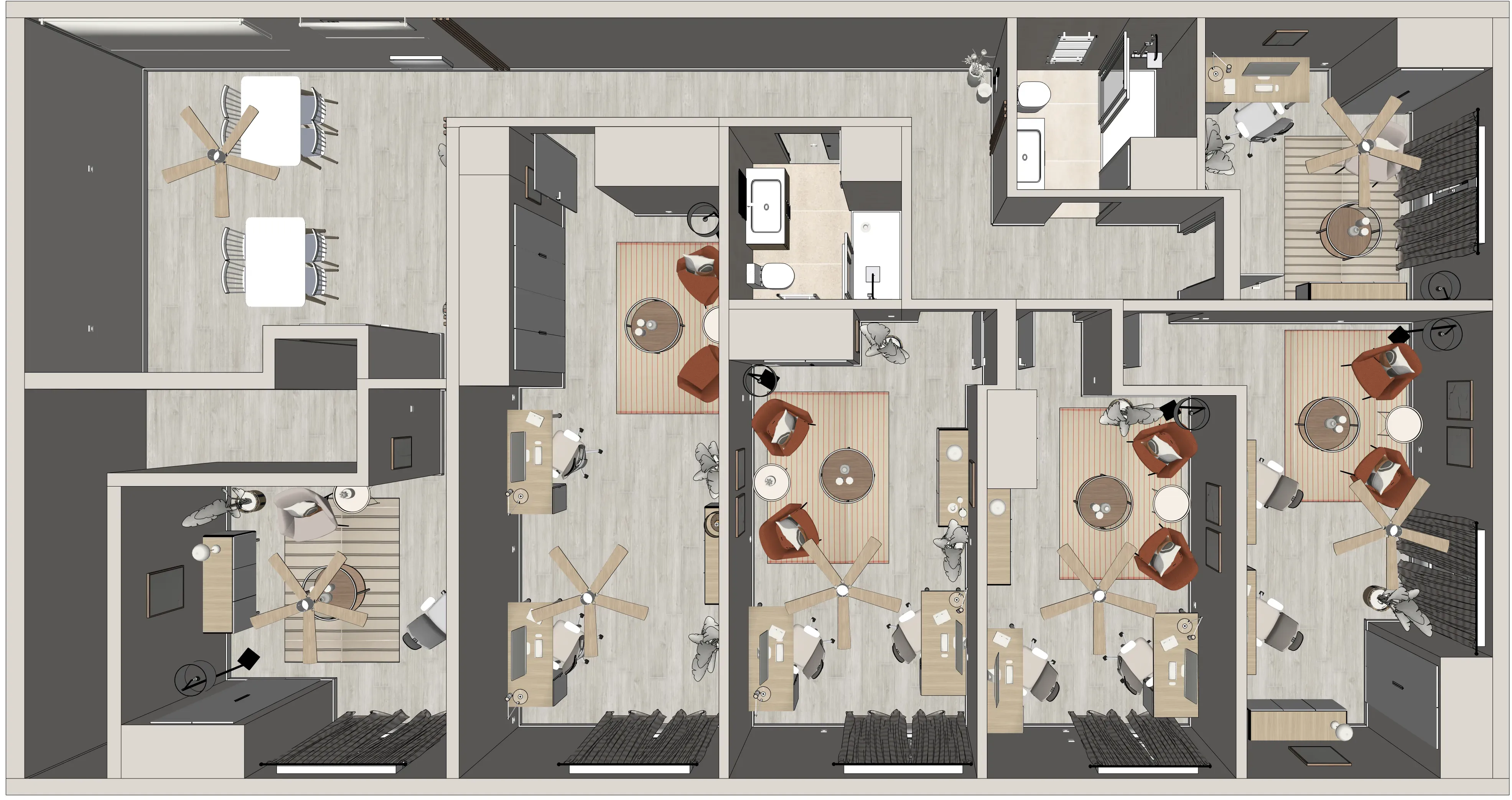
The technical documentation fixes zoning, clearances, key positions and furnishing logic, with specific emphasis on repetition and control (bedrooms/bathrooms) to simplify coordination.
Circulation and order
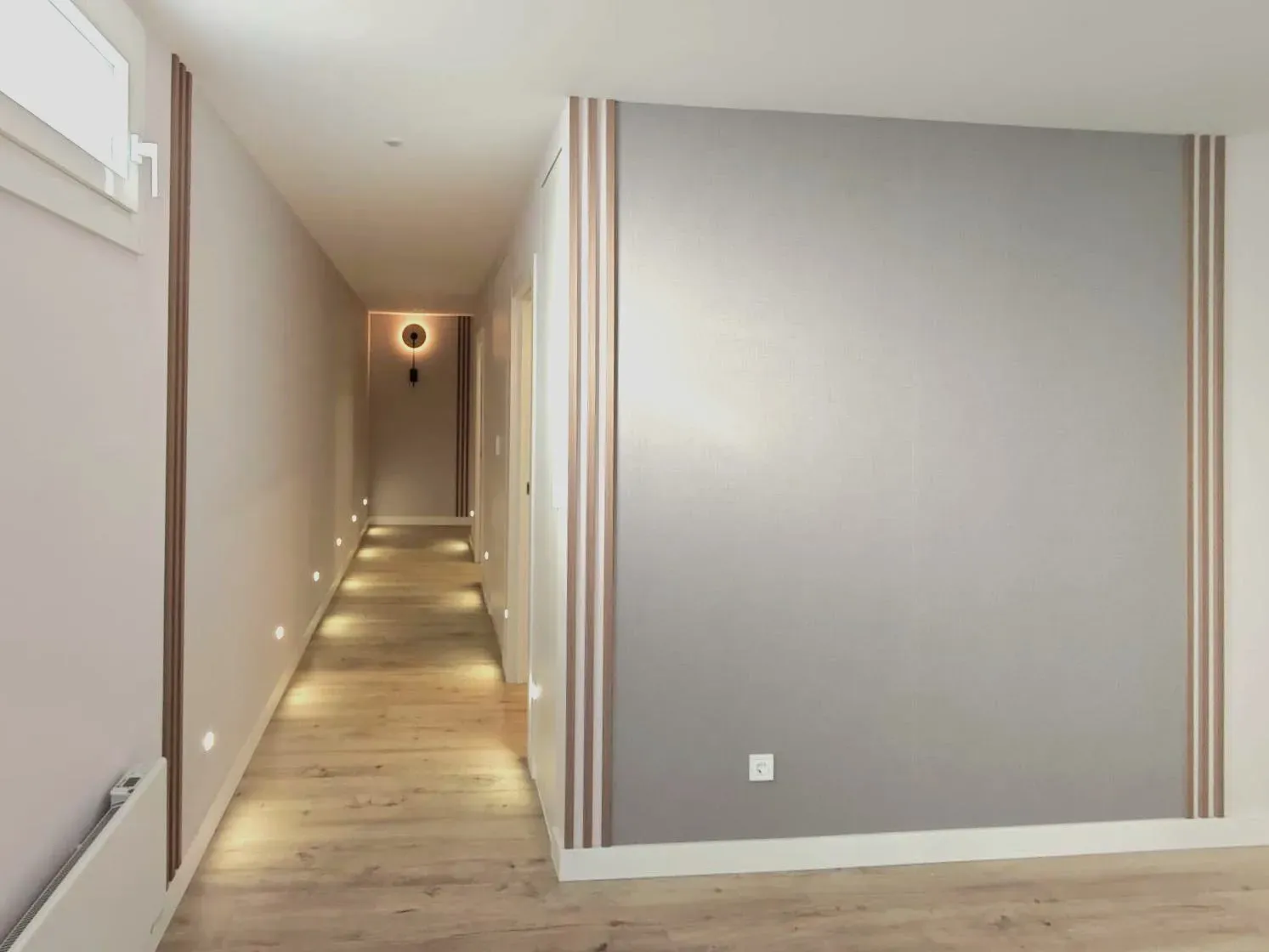
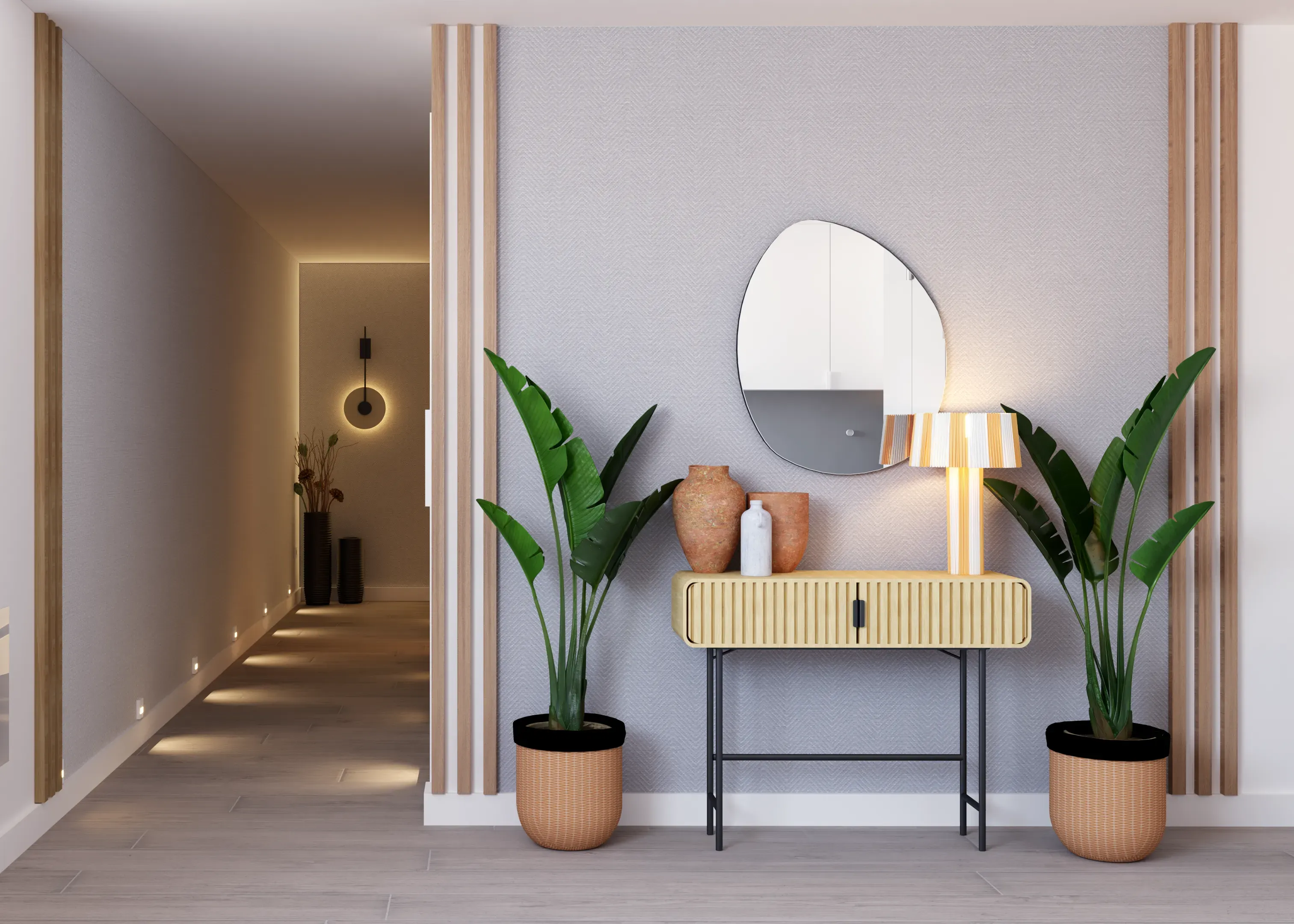
Circulation is used as an organising tool: the corridor as a clear axis, controlled light and material continuity. This keeps the overall reading calm even with a demanding programme.
integrated kitchen
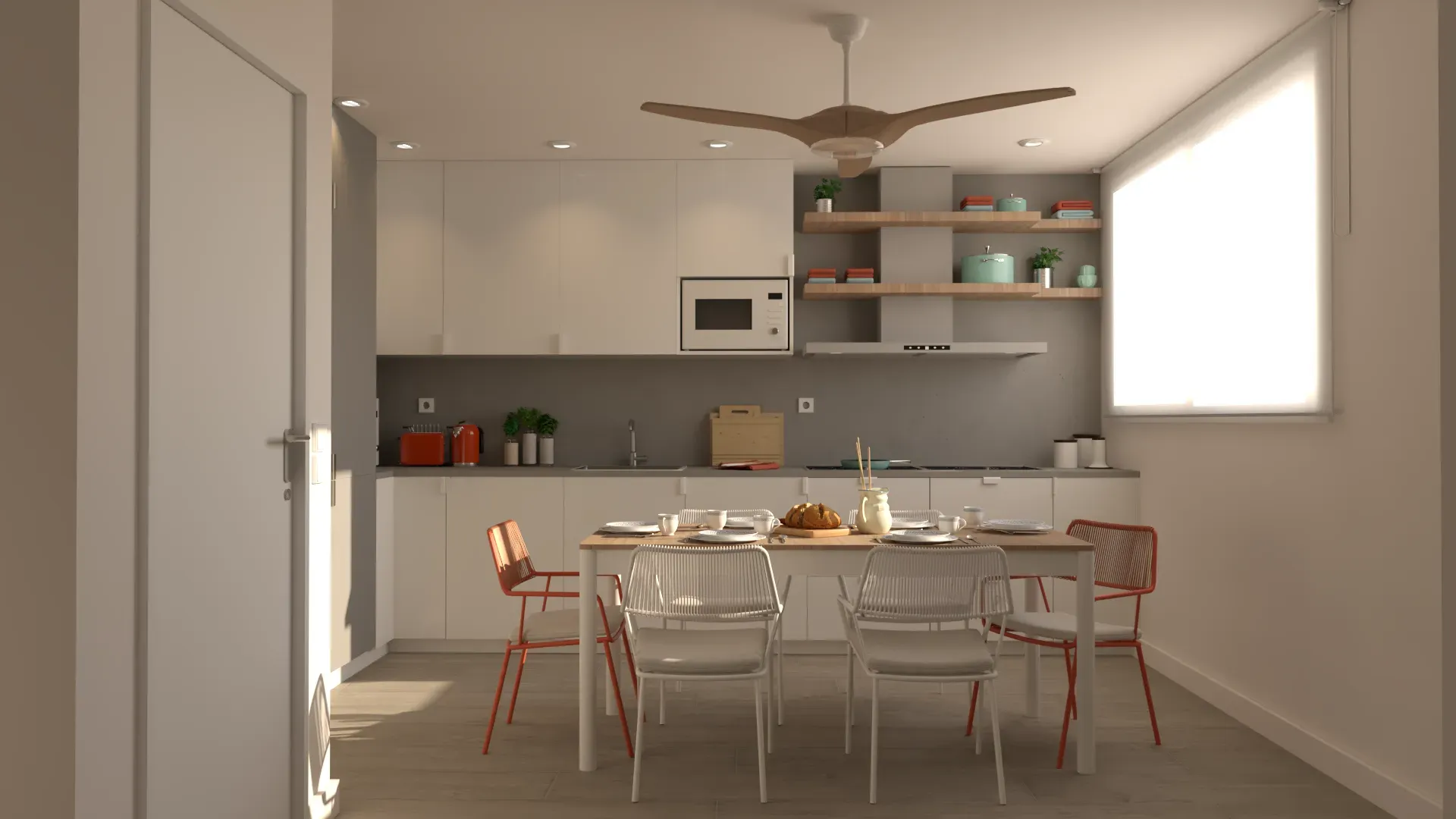
The kitchen is treated as an everyday-use element integrated into the overall system: a neutral base, clean reading and light points that ensure functionality without visual overload.
Overall reading
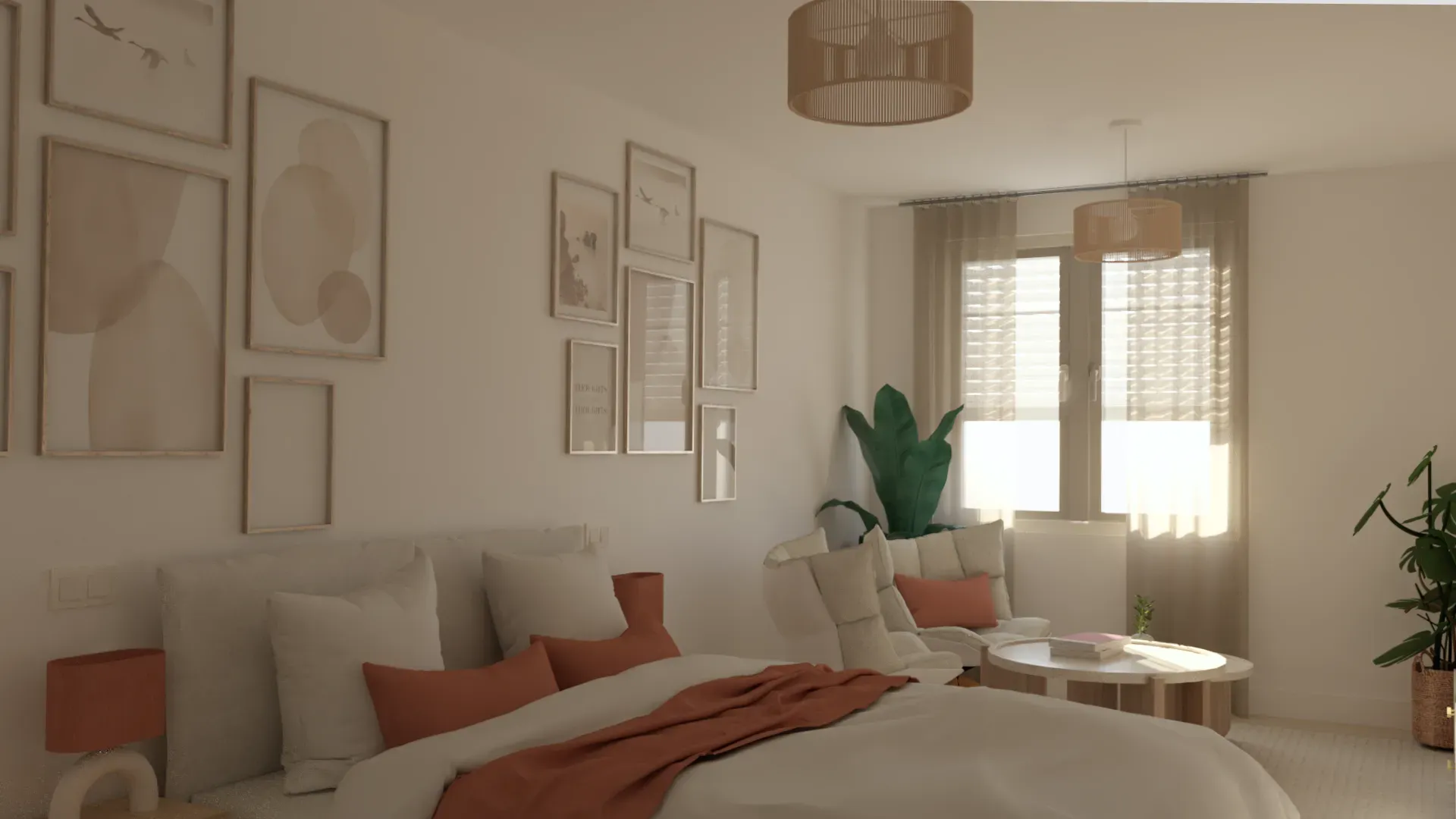
In bedrooms, the priority is a repeatable, controlled fit-out: capacity, order and clean wall elevations to avoid saturation. In the day area, proportions and natural light orientation are tuned to add depth and coherence to the spatial sequence.
Phase 2 · Offices
Later redistribution: partitioning, workstation density and MEP coordination.
After the client requested a change of use, the project moved into a spatial reconfiguration phase: defined geometry, legible partitions, and early identification of MEP critical points to ensure coordination of joinery, lighting and detailing.
Single office
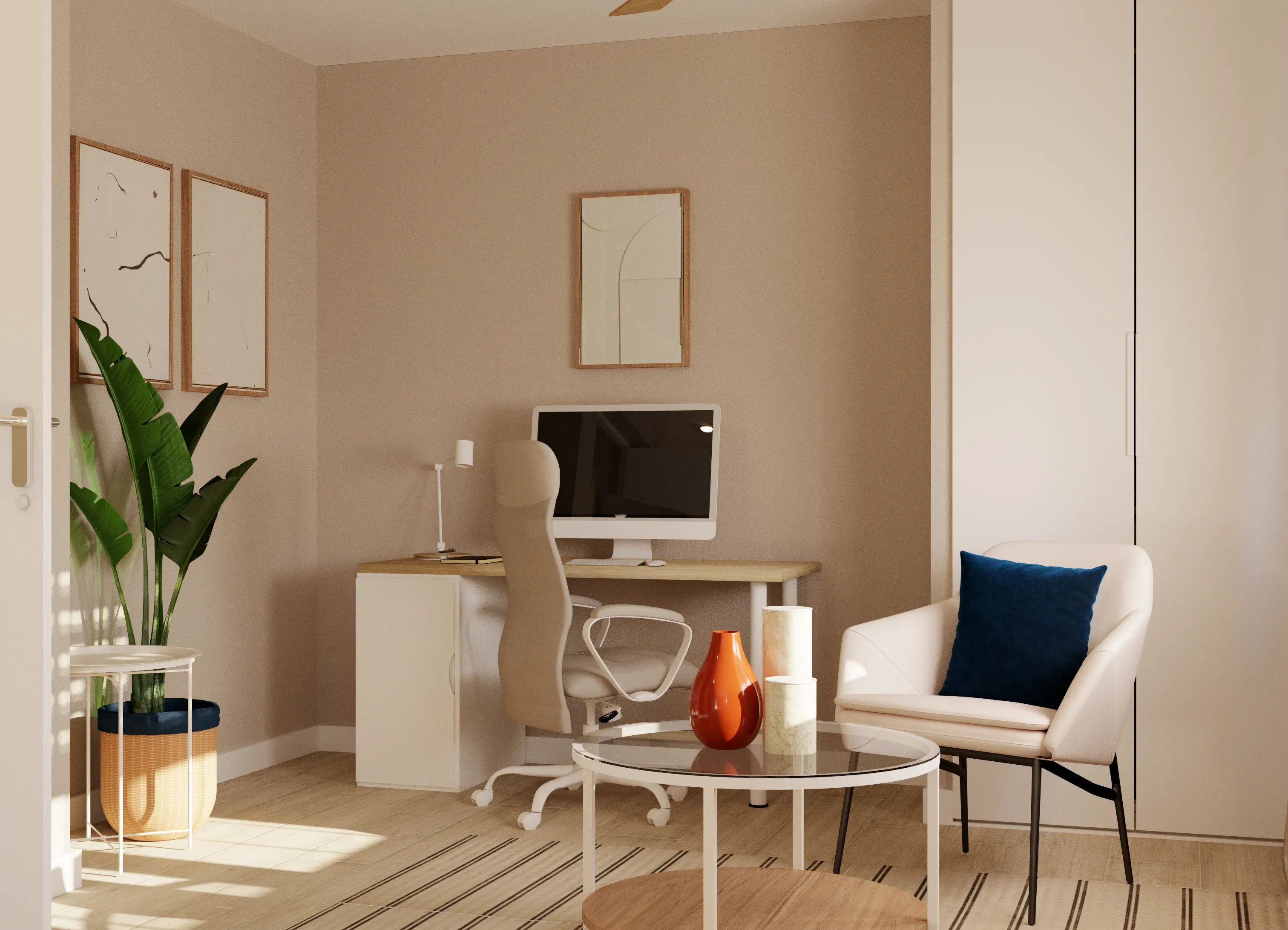
In single offices, the relationship between depth, lighting and furniture is checked, keeping density controlled.
Double office
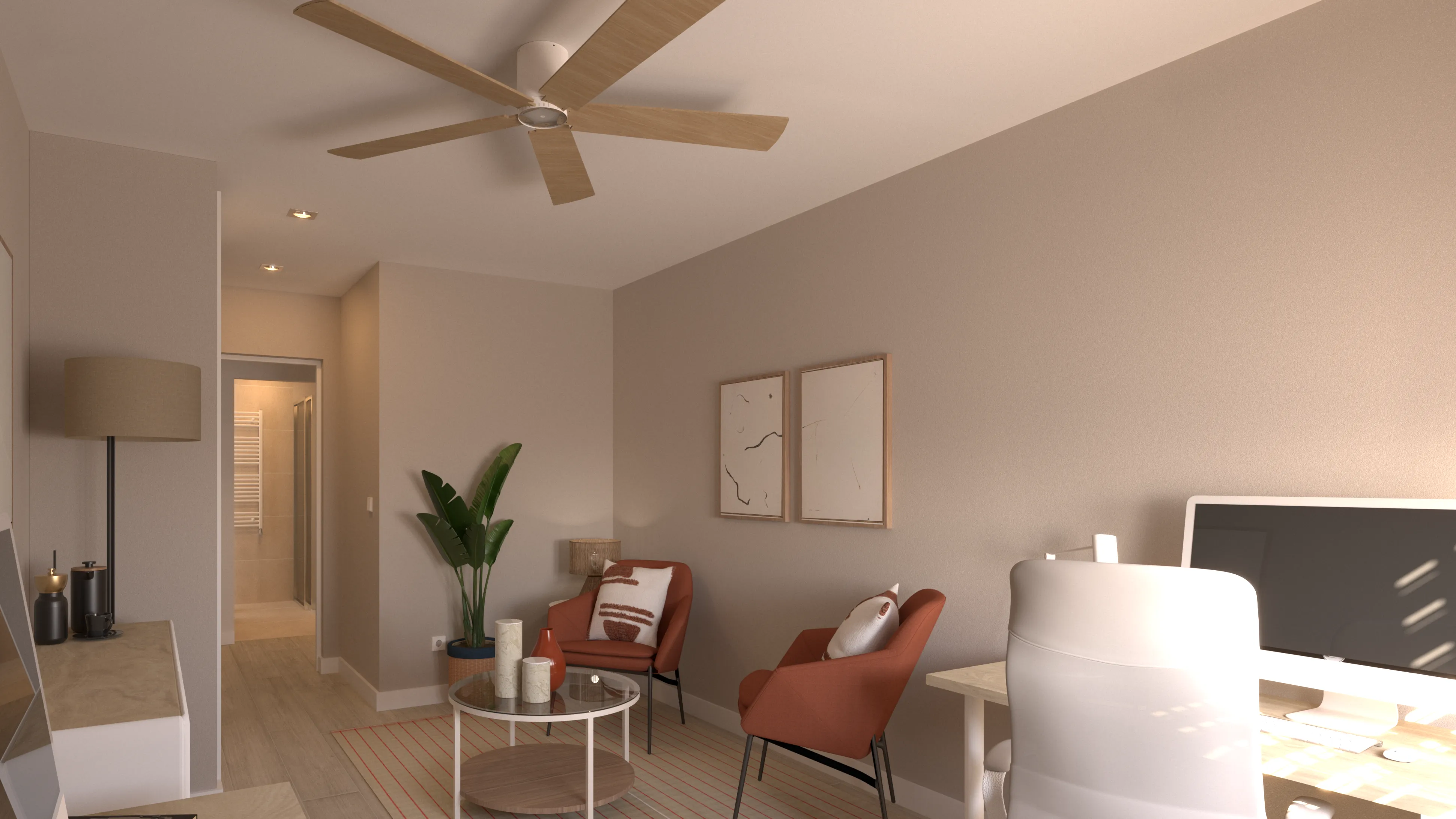
In double offices, workstation density and clarity of use are validated, prioritising a sober reading and clean detailing.
Outcome
Validated on site: lighting and material coherence aligned with the design intent.
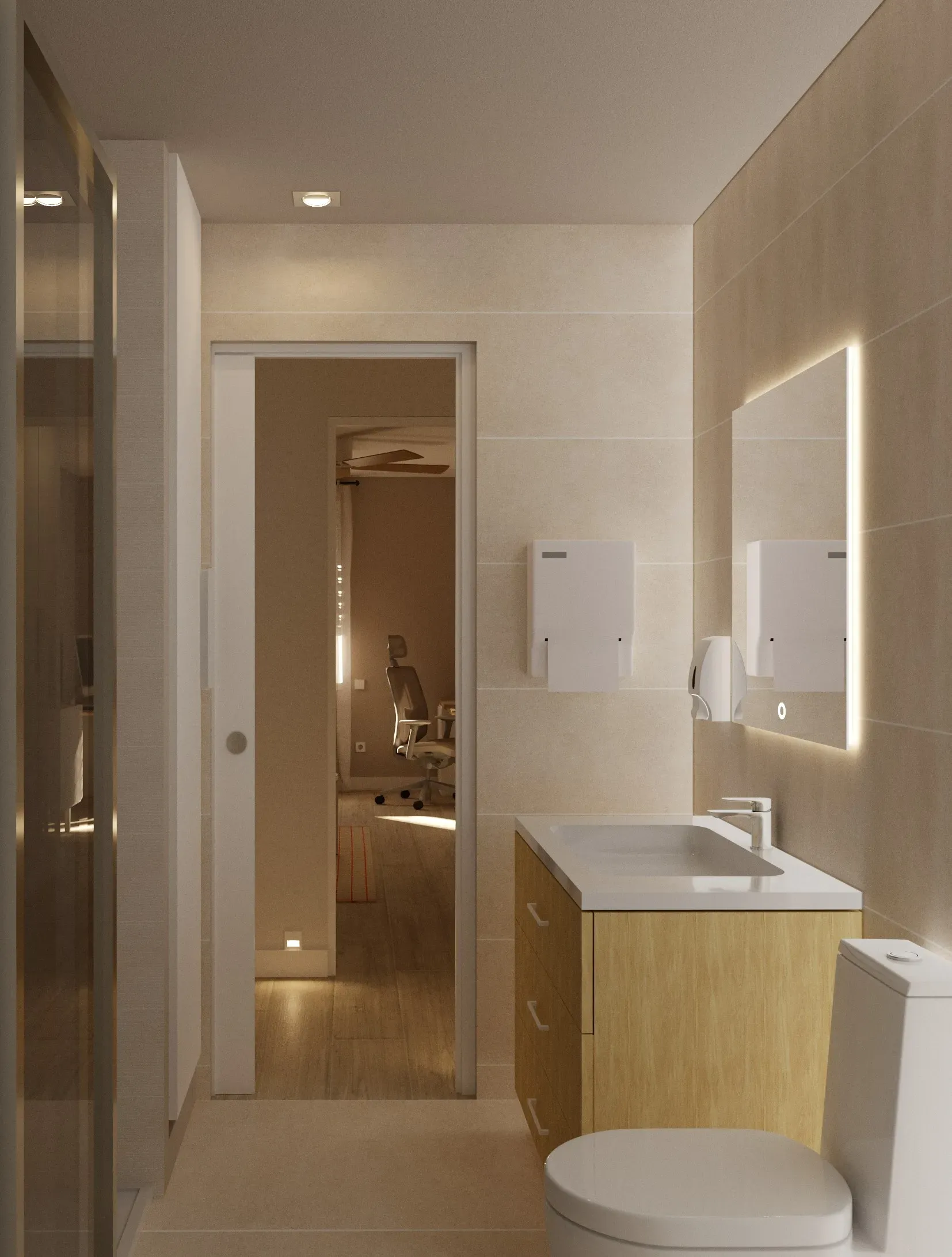
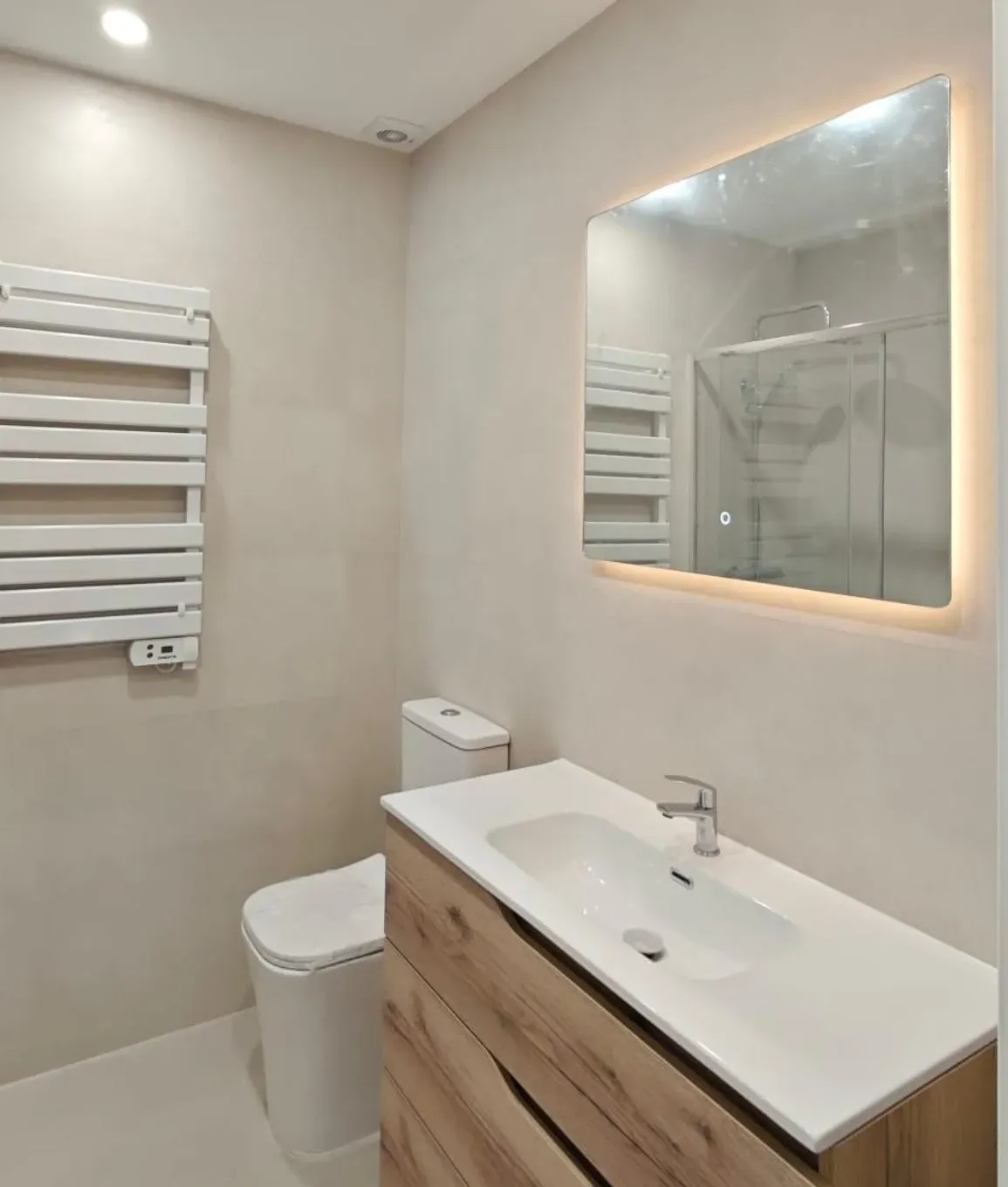
The built outcome confirms the consistency of the criteria: clean reading, controlled lighting and a restrained material palette. The comparison validates that the design decisions are executable and translate to site without distortion.
Looking for interior support? Interior design as project and site support: criteria, useful documentation and coordination of finishes/lighting, with defined scope, deliverables and timeline from the outset.
Or contact me directly: