Kids’ Bedroom Transformation · Madrid
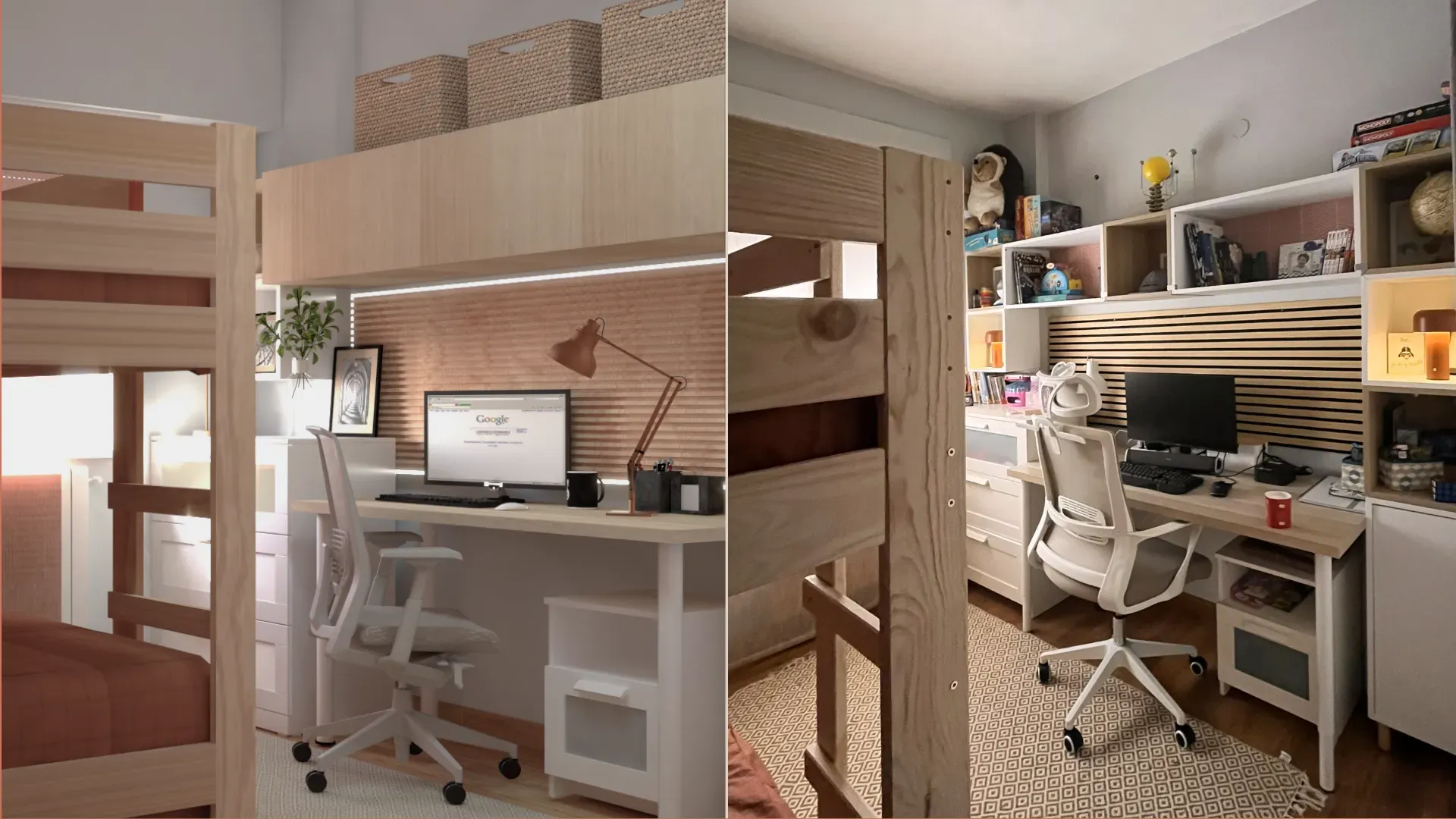
Spatial optimisation in a compact kids’ bedroom, resolved through an
integrated continuous furniture system combining sleep, study and storage without construction work.
The proposal is based on precise modulation, height control and surface continuity,
prioritising build feasibility and execution clarity, validated in the built result.
Context
Constraints, operational objective and translation into execution.
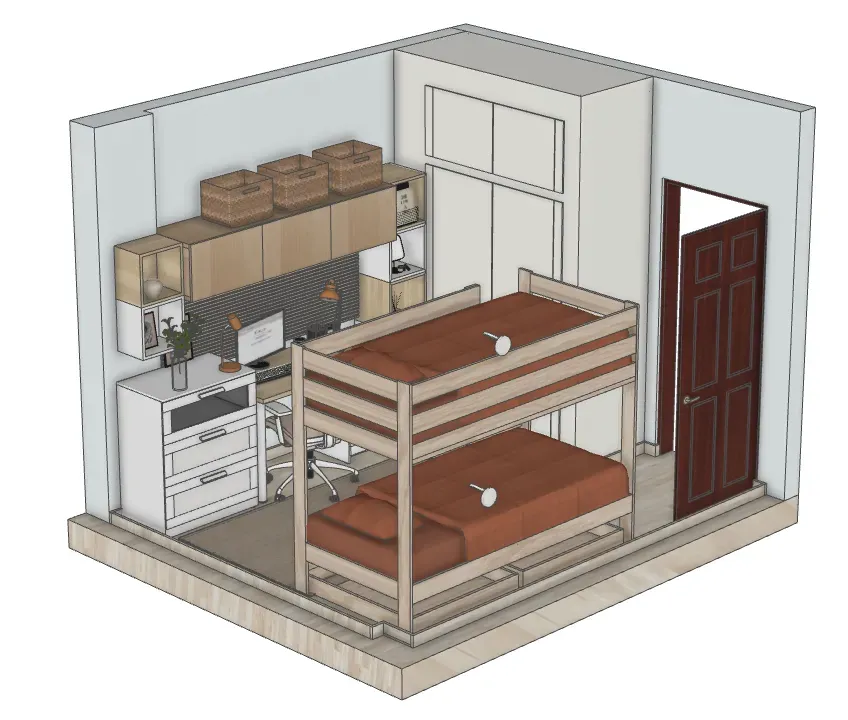
The original space presented tight geometry and a demanding brief for its size: sleeping area, fully functional study station and real storage capacity, designed for intensive and evolving use.
The goal was to resolve the full programme without fragmenting the space, avoiding isolated pieces and instead developing a unified system that simplified spatial reading and execution. The intervention was carried out without construction work, working through proportion, modulation and system logic, with particular attention to usable heights, junctions and surface continuity.
Documentation
Quick reading · dimensional verification · coordination support.
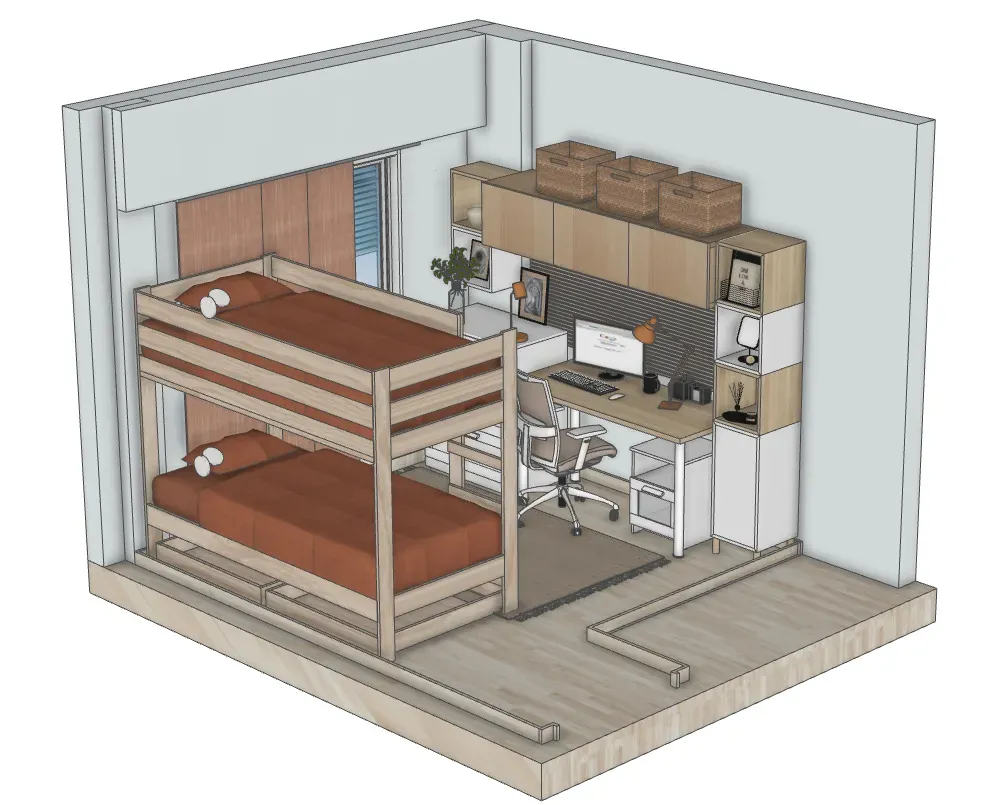
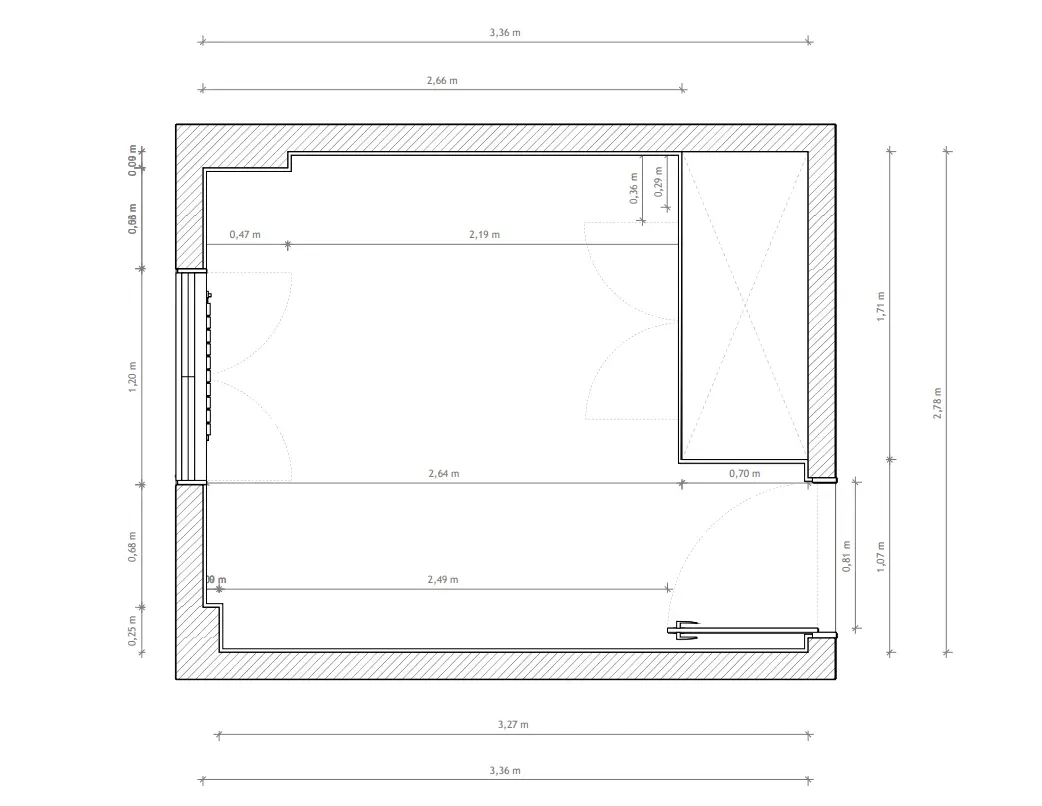
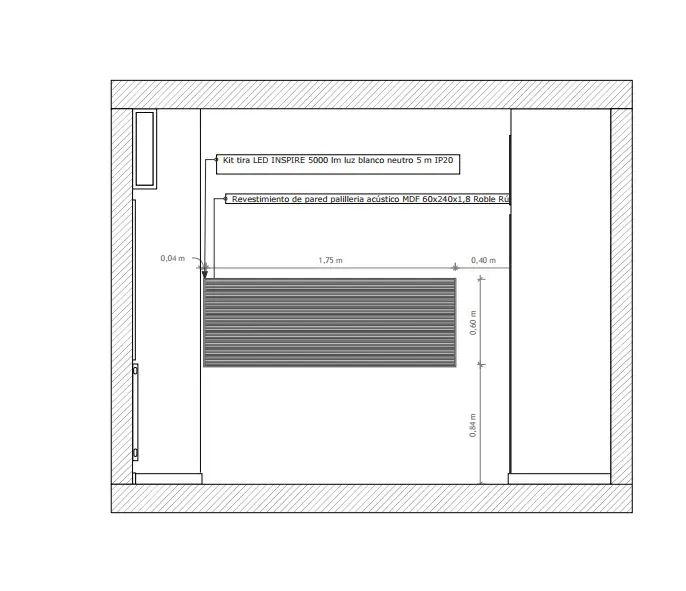
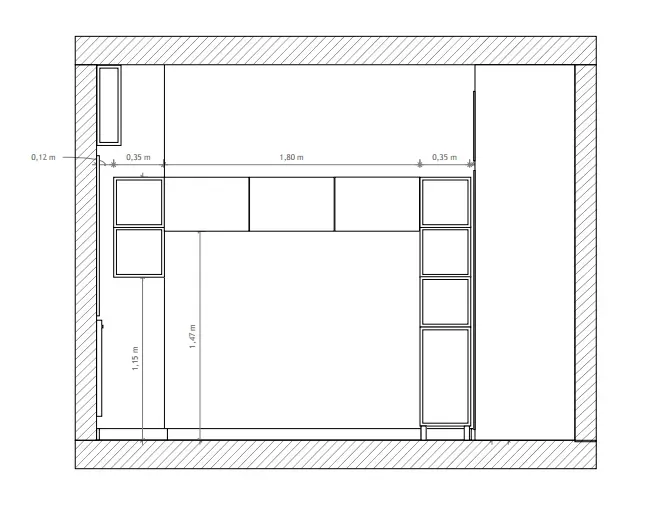
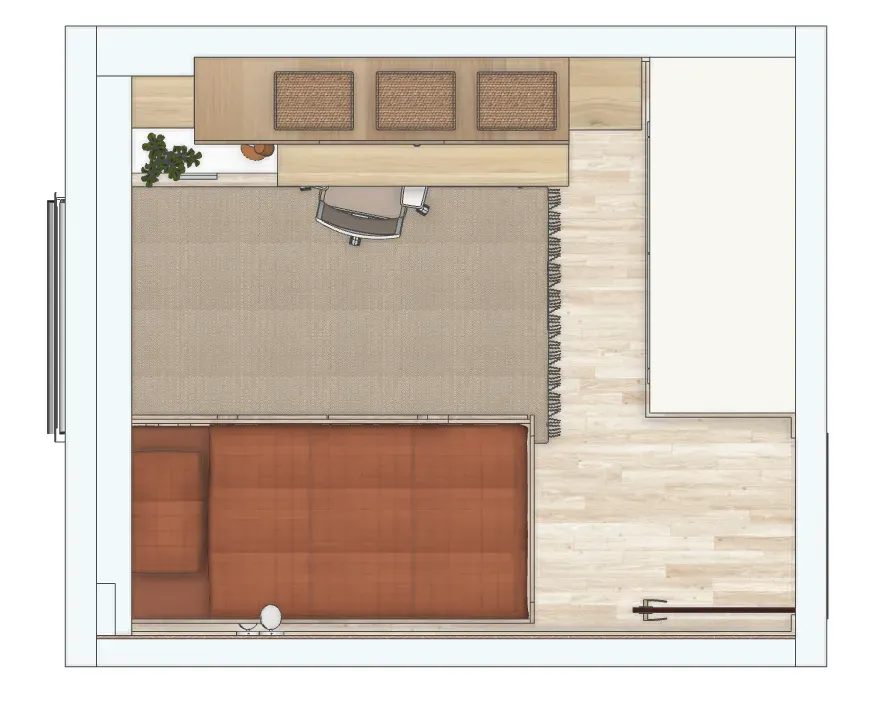
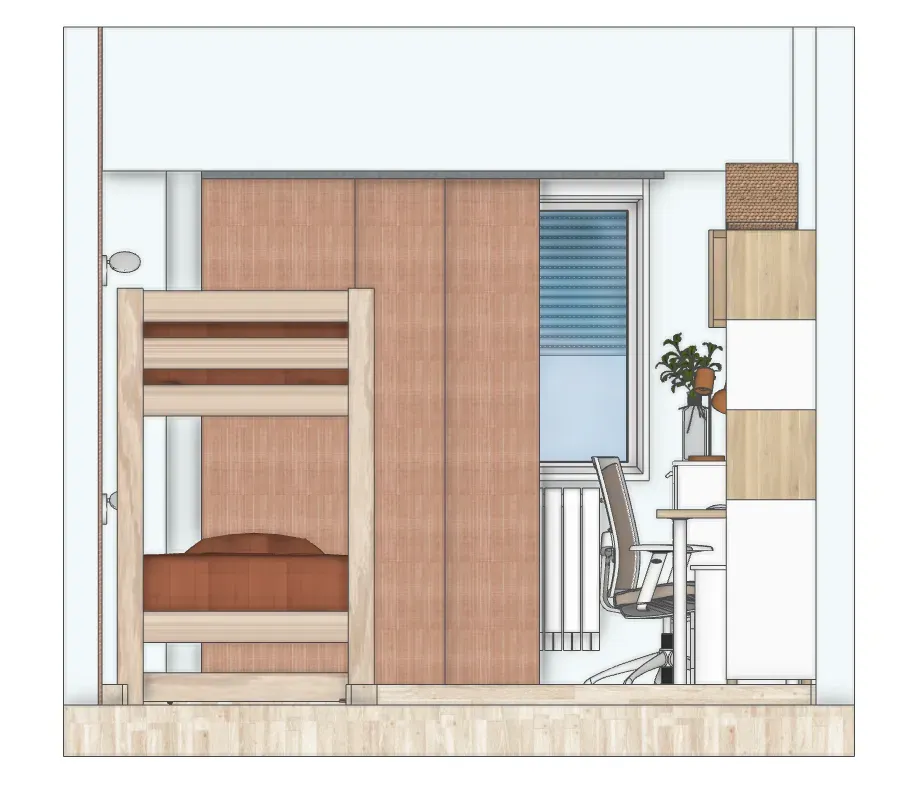
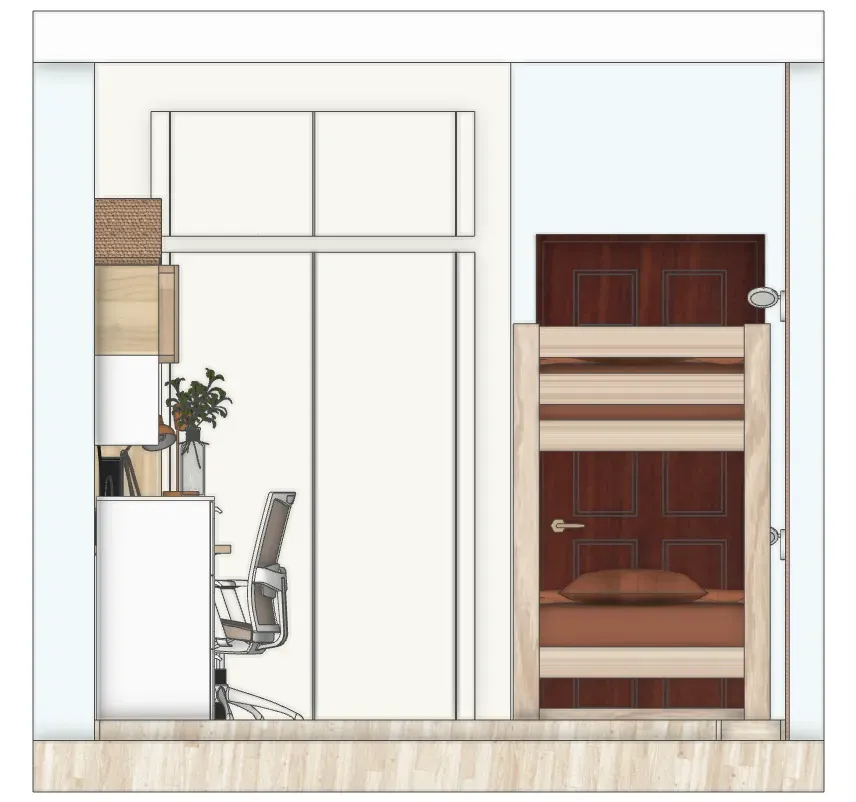
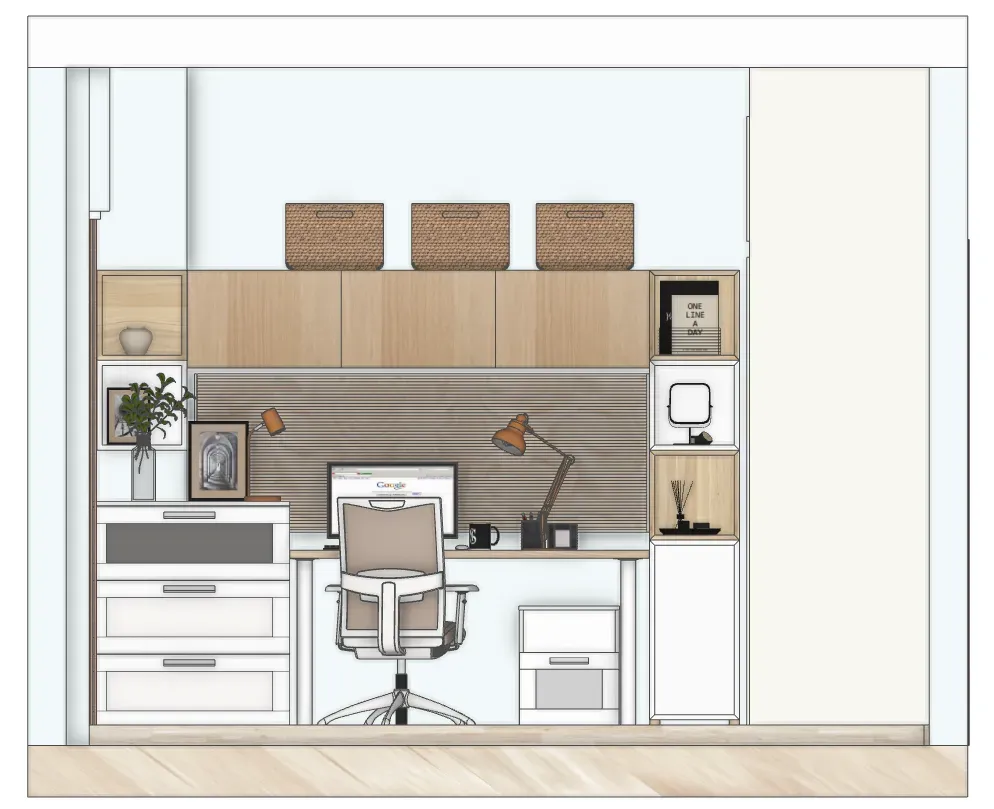
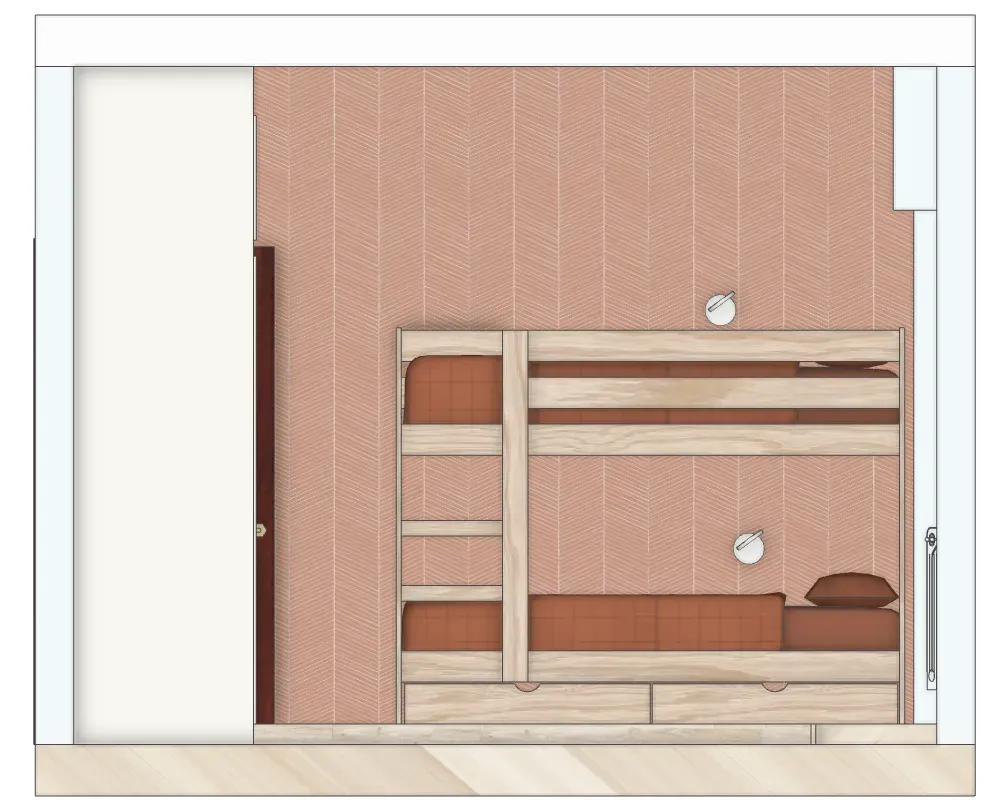
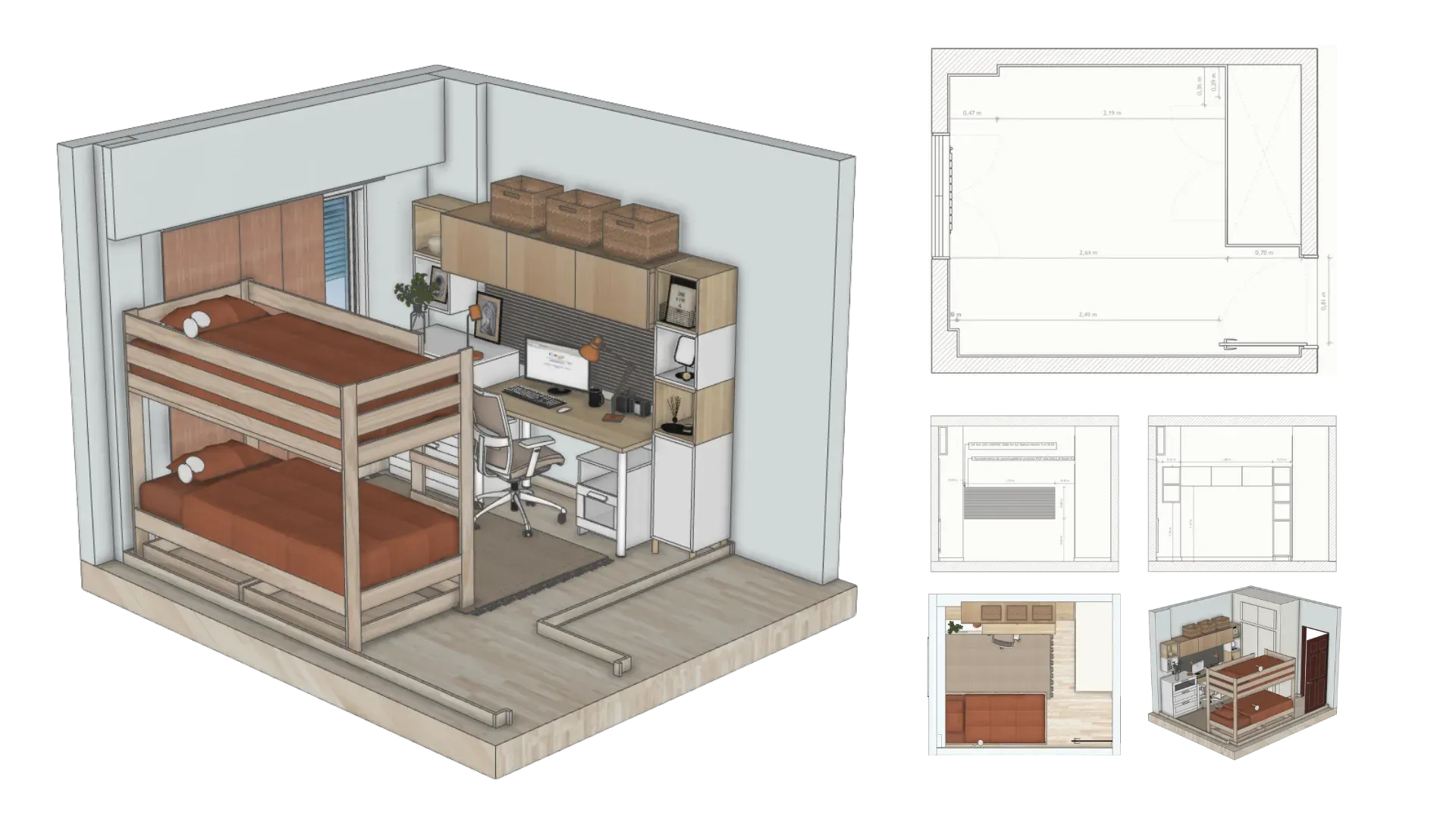
Dimensioned floor plan for real fit verification, elevations to control heights and junctions, and axonometric drawings for system comprehension. An installation sheet supports coordination and reduces workshop/site misinterpretation.
Design Strategy
Complete programme in 9 m²: hierarchy, continuity and feasibility.
The solution is conceived as a continuous system where each element responds to a shared logic of modulation and alignment. Horizontal continuity enhances spatial perception, while strict depth and clearance control ensures functional performance. Lighting is integrated as part of the system itself, avoiding applied elements that could compromise execution or maintenance.
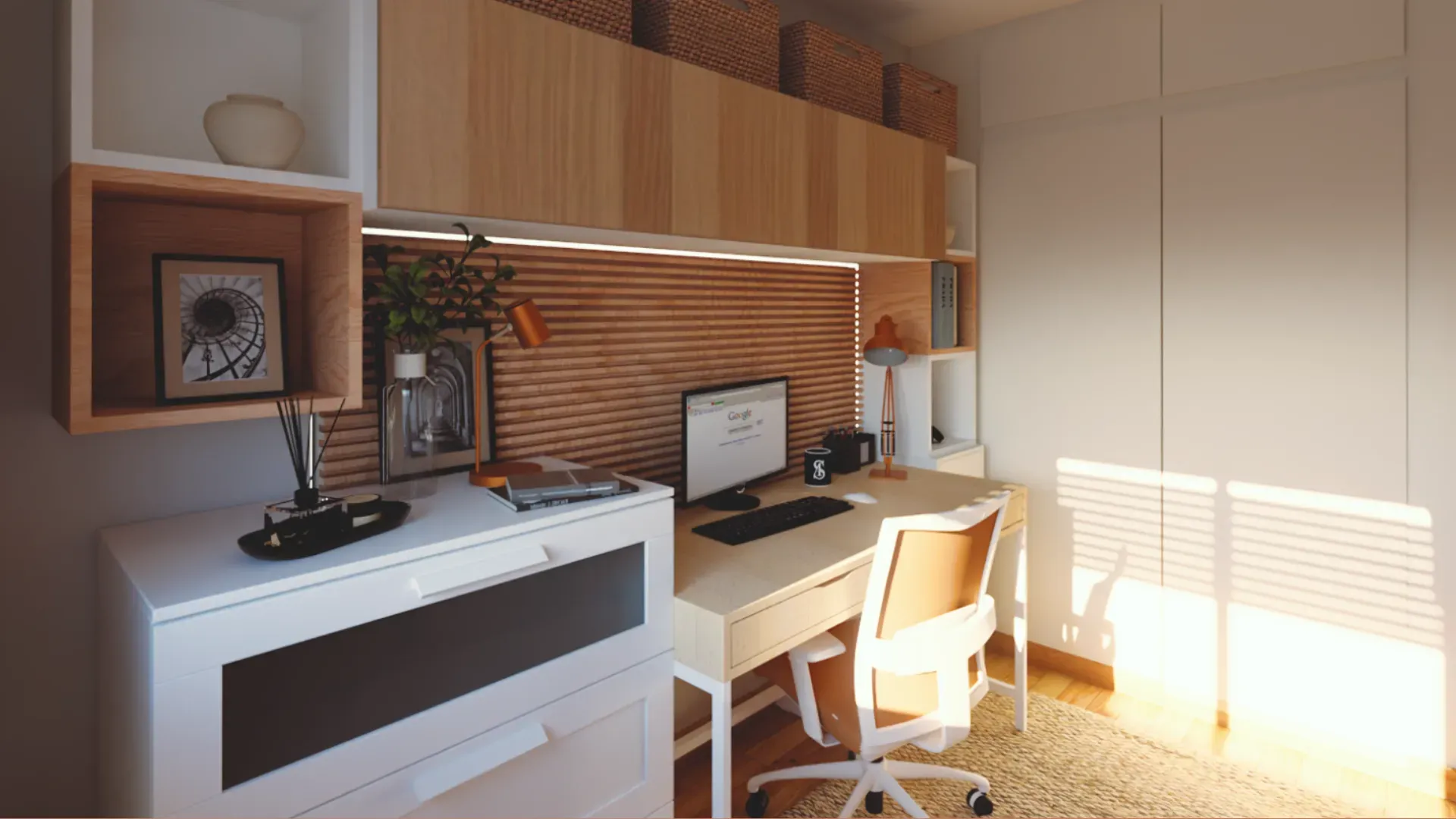
Continuous modular system
- Work surface dimensioned for prolonged use, with verified depth and height.
- Immediate storage + seasonal depth, organised by accessibility hierarchy.
- Controlled rhythm of open/closed elements + integrated lighting for continuity.
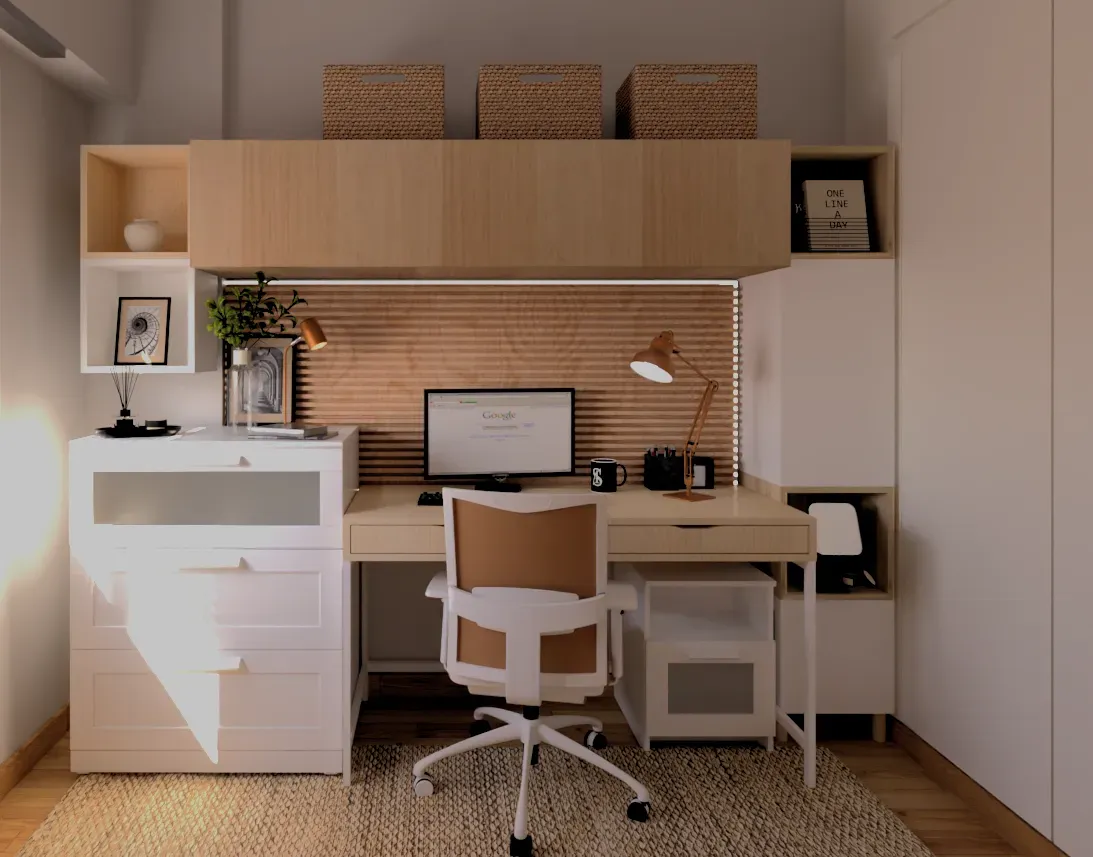
Proportion and usability
- Dimensions defined according to ergonomics and use sequence.
- Integrated lighting (task + ambient) with coordinated position and height.
- Demountable and adaptable solution, suitable for rental housing contexts.
Execution
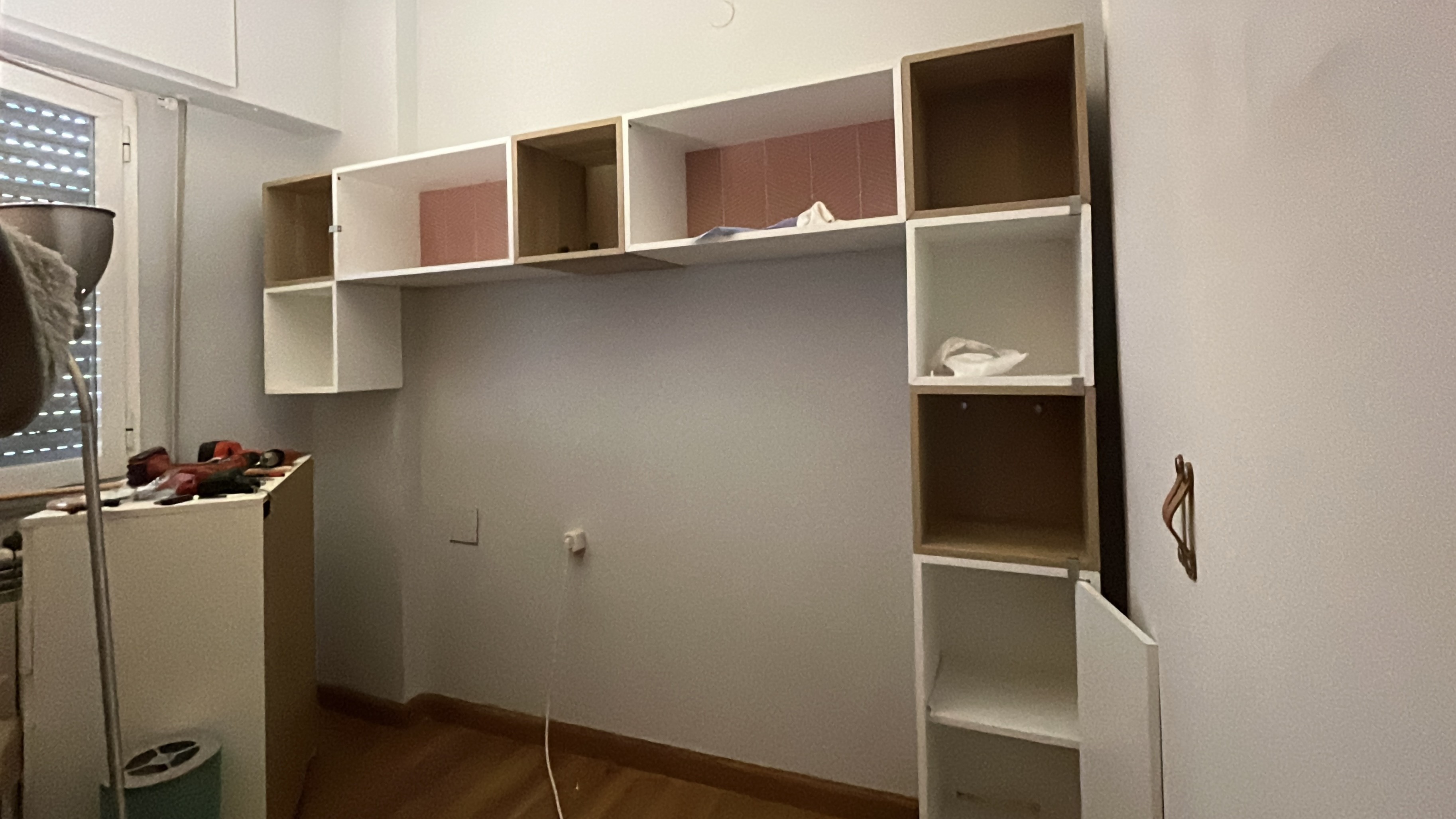
Critical points: setting-out, electrical coordination and junction control.
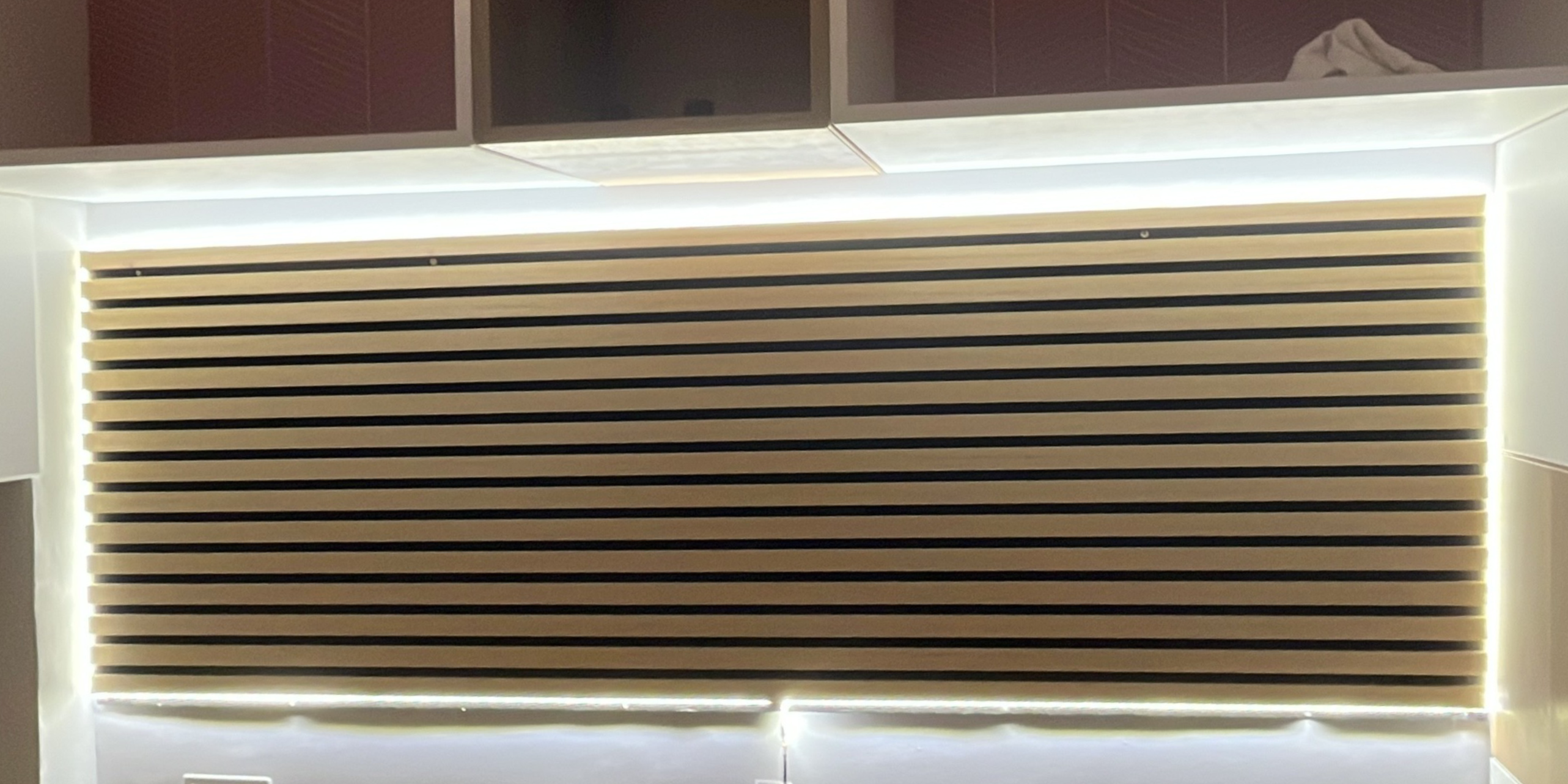
During coordination, axes, dimensions and junctions were fixed to ensure alignment continuity and avoid site adjustments. Heights and electrical points were defined according to scope, together with cable routing and assembly sequence, ensuring a buildable system without improvisation and compatible with carpentry and installation tolerances.
Outcome
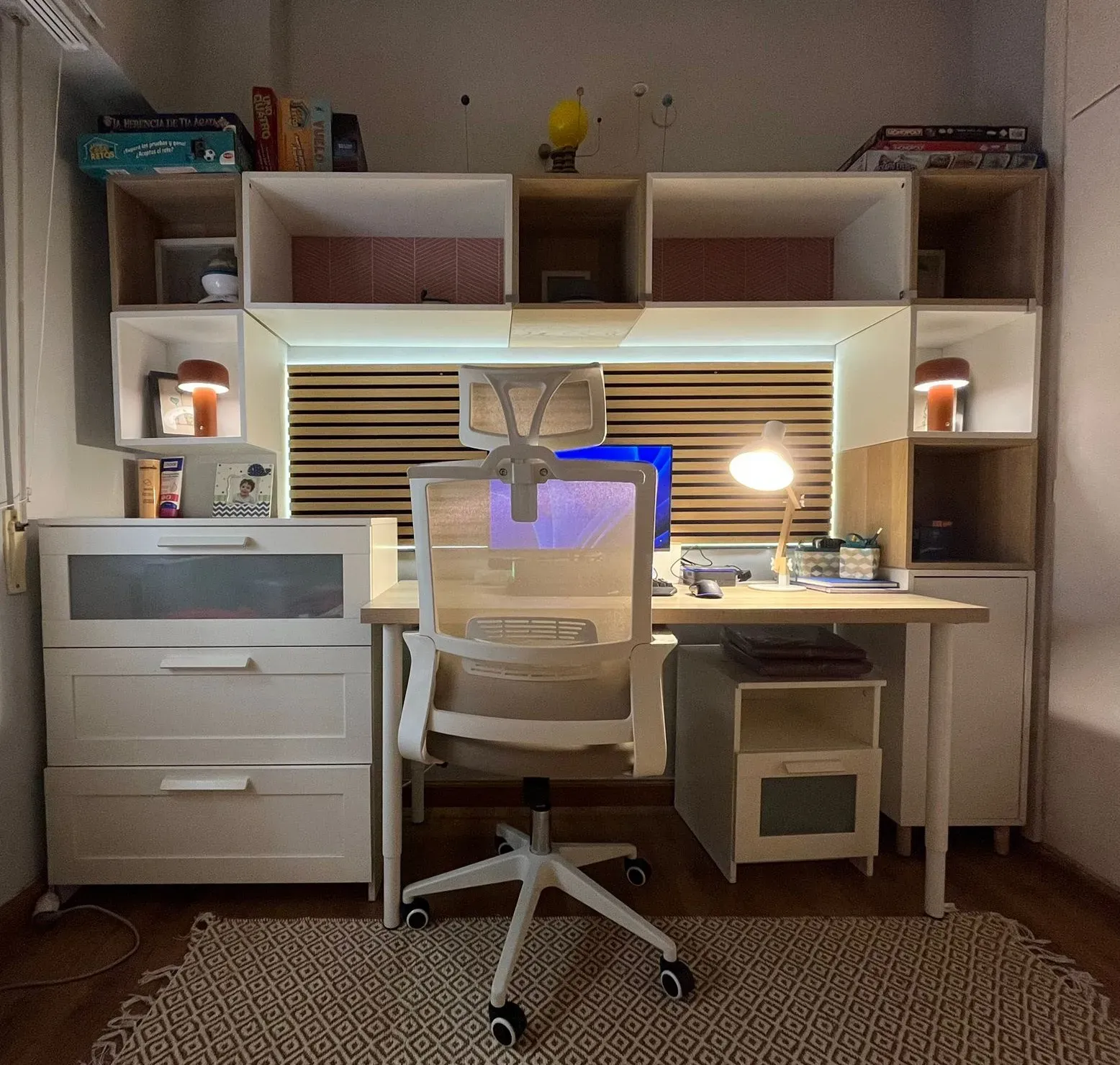
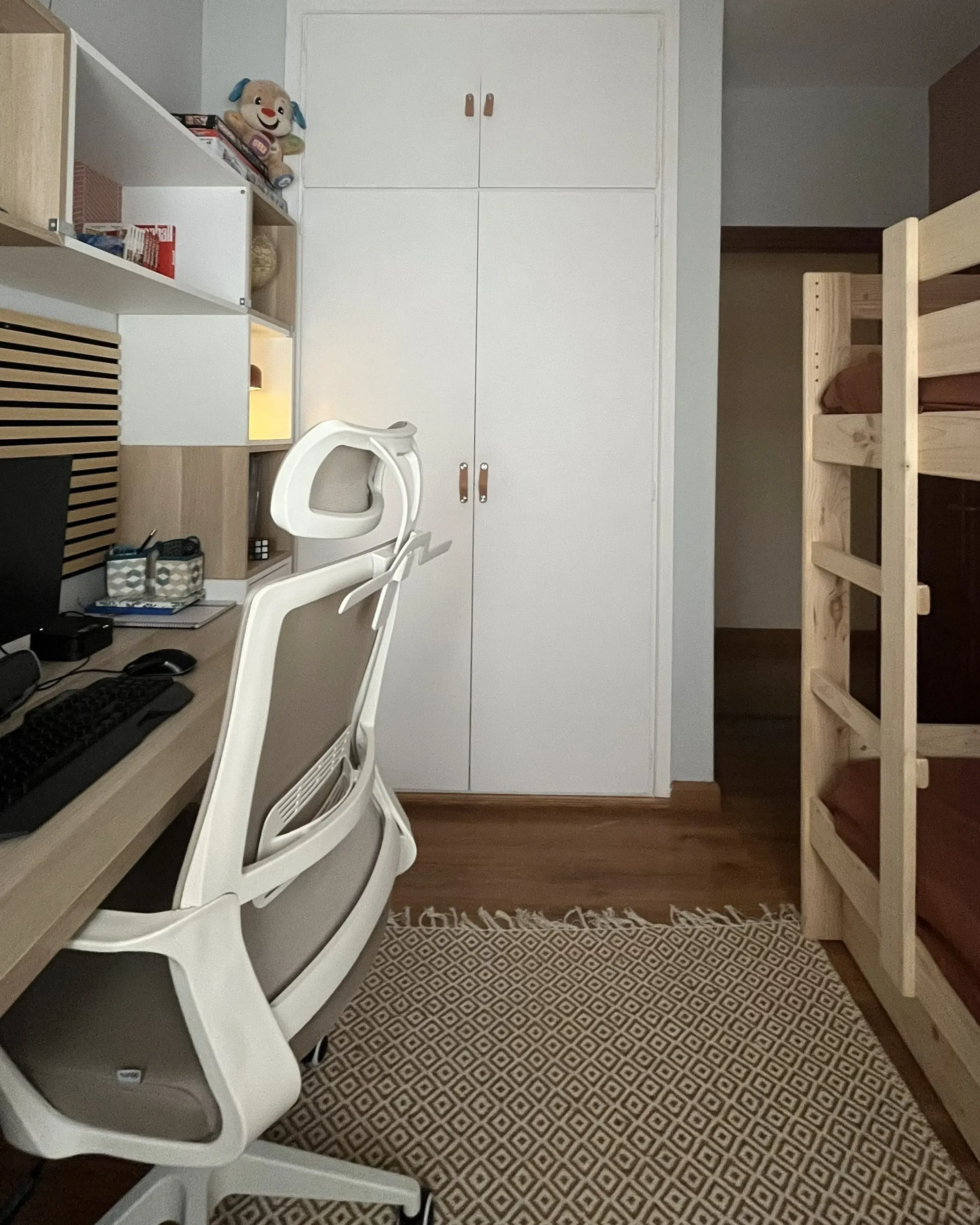
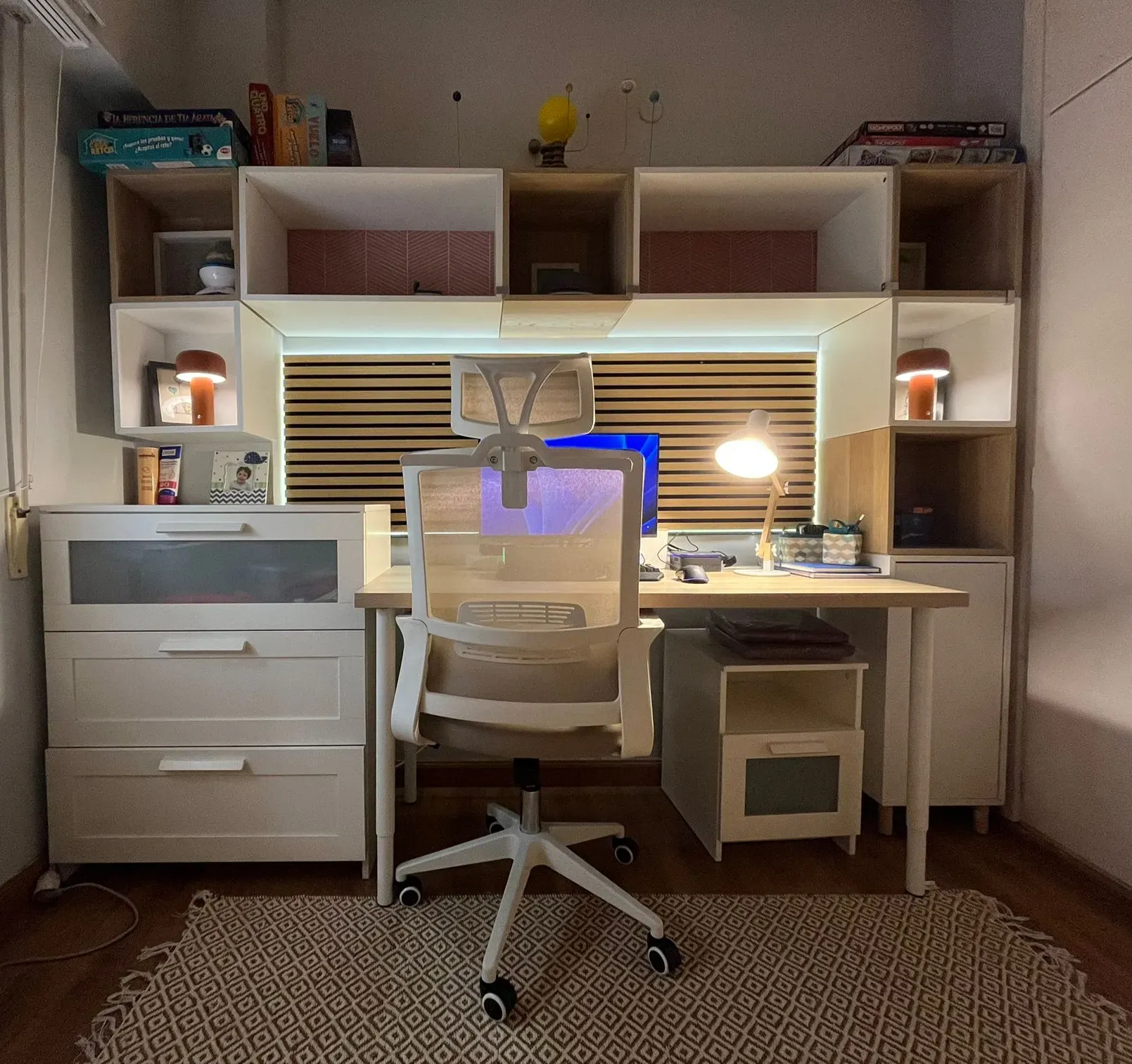
Built validation: coherence between concept and execution.
The final result confirms the effectiveness of the proposed system:
precise fitting, surface continuity and compatibility between modulation,
lighting and real use.
The built execution maintains the intended unified reading,
minimising site adjustments and ensuring functional clarity.
In 9 m², success lies not in adding elements,
but in resolving the entire programme through
dimensional control, coordination and junction precision.